Stay Connected


Stay Connected


Terms of Use
Privacy Policy
Cookie Notice
Ant Group
© 2026, Ant International or its affiliates.


Ant International President Highlights AI and Connectivity as Key SME Growth Drivers
• Global payment leaders agree on the need for more industry collaborations in bridging payment systems and tech know-how.
• Artificial Intelligence (AI) is being converted into flexible cross-border payment and digitisation solutions to help SMEs raise efficiency, lowering costs and controlling risks.
Digital payment innovations are increasingly powerful tools for global businesses to raise productivity and turbocharge growth. The Digital Payment Market size[1]is expected to grow at a CAGR of 11.8% and reach US$193.7 billion. However, there are digital divides and silos abound in core financial services for the global commerce system, especially in cross-border online and offline digital payment and settlement.
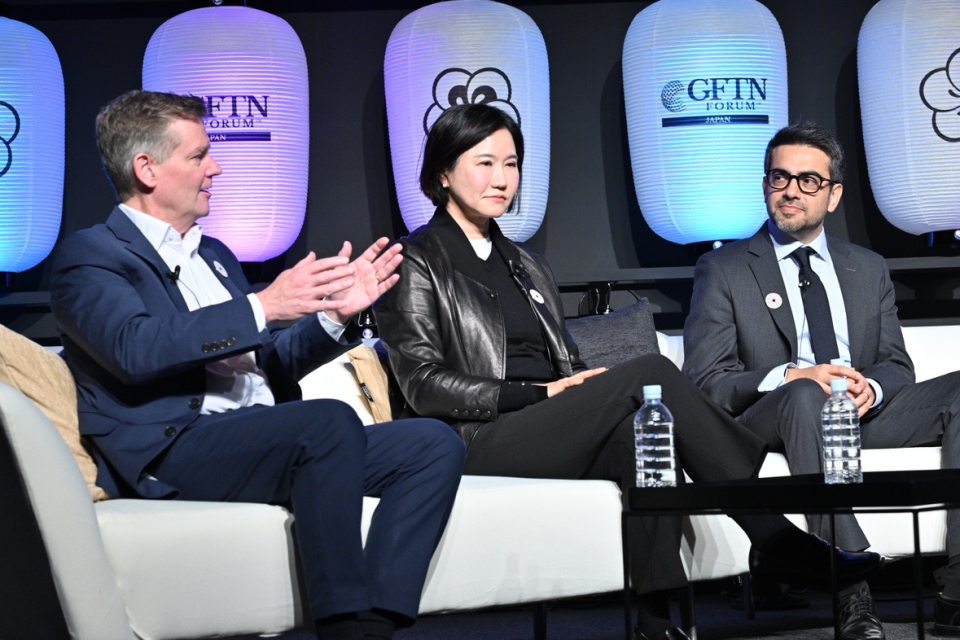
“Even as technology advances in leaps and bounds, small businesses continue to face challenges in today’s digitised international transactions, from cross-border payment to cross-market growth,” said Douglas Feagin, President of Ant International, during the GFTN Forum held during the Japan Fintech Festival in Japan in March 2025. “We need to convert exciting developments in foundational technologies, such as AI, into comprehensive, effective and affordable solutions for the world’s long-tail business community.”
Connectivity Crucial for Global Commerce
Ant International’s flagship Alipay+ cross-border mobile payment and digitisation technology has expanded to support 36 international payment apps, connecting over 90 million merchants across 66 markets. This “invisible” technology behind the cash register enables merchants to receive cross-border payments seamlessly and securely from individuals using their home e-wallets while maintaining competitive foreign exchange rates.
Interoperability is key, as local SMEs should be able to accept international payments more easily. In Asia, initiatives like national QRs have greatly boosted connectivity, and Alipay+ helps to bridge these infrastructures with our global payment partner users, but more needs to be done to bring together card and wallet-based ecosystems, Feagin said.
“Consumers and merchants demand seamless, secure, and timely payment experiences,” said Sandeep Malhotra, Executive Vice President of Products & Innovation for Asia Pacific at Mastercard. He noted that interoperability issues between digital wallets and cards can complicate the payment ecosystem, especially in cross-border contexts.
“The real challenge is making these transactions work together. That’s why we partner with leading wallets in Asia like Alipay, DANA in Indonesia, Touch ‘n Go in Malaysia, Bakong in Cambodia, and LankaPay in Sri Lanka,” Malhotra said. He also highlighted that Mastercard users can now bind their cards to Alipay in China to access tens of millions of merchants who accept QR payments.
AI Critical on Efficiency, Costs and Risk Controls
For SMEs, the capacity to accept various forms of international payments is not merely an advantage; it has become an essential factor for survival and growth in an increasingly competitive marketplace, Feagin noted.
Artificial Intelligence (AI) technology is crucial in addressing these pressing needs by providing tools that help SMEs make informed decisions swiftly, ensuring they meet customer demands while minimizing operational risks. A recent McKinsey report[2]for 2025 underscores this importance, indicating that 92% of businesses plan to increase their AI investments this year. The consulting firm earlier predicted that companies integrating AI into their financial operations can expect productivity increases of up to 25%[3].
At Ant International, AI-powered solutions are being developed to forecast currency demands based on transaction flows, enhancing efficiency in foreign exchange processes and steering the industry towards real-time payment systems.
For instance, Ant International’s AI-driven solution can forecast customers’ foreign-exchange needs with more than 90% accuracy based on provided data, which enables the company to help customers optimize their FX strategies.
As financial fraud becomes increasingly sophisticated, AI is paramount in safeguarding transactions. Ant International’s AI-powered risk management capabilities can effectively implement advanced fraud detection mechanisms that analyze patterns, identify anomalies, and protect against potential threats.
Interoperability will continue to be enhanced, particularly in Asia, where national QR systems and mobile wallets facilitate seamless transactions. This trend is expected to evolve rapidly as new LLM models are developed, enabling companies to streamline these workflows, said Feagin.
“We expect this revolution to continue at a rapid pace, and AI to accelerate efficiency and provide solutions for our customers,” added Feagin.
-END-
Takeaways of other Ant International speakers at GFTN Forum, Japan in March 2025.
Leiming Chen, Chief Sustainability Officer, Ant International
– Opportunities in Sustainability: Partnerships that support sustainability initiatives, including ESG-linked financial products that incentivize corporate sustainability actions.
– Support for SMEs: The importance of helping SMEs tackle sustainability challenges by providing better access to financing opportunities and more favorable financing terms.
– Industry Collaborations: The need for the industry to address major sustainability issues thoughtfully and collaboratively, recognizing that SMEs cannot thrive without embracing sustainability goals.
Kelvin Li, Head of Platform Tech, Ant International
– Transition to Token-Based Markets: The shift from fiat-based to token-based capital markets and identifies the need for more efficient payment systems in this new landscape.
– Blockchain Integration: A significant proportion of treasury operations have shifted to blockchain, allowing for 24/7 services and instant efficiency, which significantly reduces working capital requirements.
– New Investment Opportunities: Utilised fresh funds from improved payment processes to invest in capital markets, such as money market funds, which require real-time services for subscriptions and redemptions.
– Interoperability Challenges: Addressed the necessity of achieving interoperability between different financial systems to facilitate seamless transactions, emphasized that existing clearing and settlement rails have not yet been effectively integrated.
Jiang-Ming Yang, Chief Innovation Officer, Ant International
– Focus on application: Build use-cases to solve real-world issues, meet customer needs, and develop professional AI applications with high accuracy based on various LLMs.
– Challenges with Deepfakes: Highlighted security concerns in the payments domain, noting that hackers are increasingly using deepfake technology to compromise systems, necessitating robust AI-driven protective measures.
– Rapid Evolution of Technology: Observed the rapid pace of advancements in large language models, urged the adoption of the latest technologies to maintain relevance and effectiveness in their domain.
– Regulatory Compliance with AI: Discussed the challenges of working in a highly regulated fintech environment, stressed the importance of proving that AI solutions can meet the same regulatory standards as human decision-making processes.
[1] https://www.marketsandmarkets.com/Market-Reports/digital-payment-market-209834053.html
[2]https://www.mckinsey.com/capabilities/mckinsey-digital/our-insights/superagency-in-the-workplace-empowering-people-to-unlock-ais-full-potential-at-work
[3]https://psico-smart.com/en/blogs/blog-how-can-artificial-intelligence-enhance-productivity-management-in-the-workplace-88579