Stay Connected


Stay Connected


Terms of Use
Privacy Policy
Cookie Notice
Ant Group
© 2026, Ant International or its affiliates.


Many leaders view sustainability as a separate mandate but in reality, it’s a critical part of business strategy to drive the long-term value of an organization. However, it only works when it’s embedded into how businesses operate and when they form collaborations with partners to deliver it. Just in the same way you might build a top tier team with each player bringing their individual skills to the table – cross industry partnership is an essential success factor.
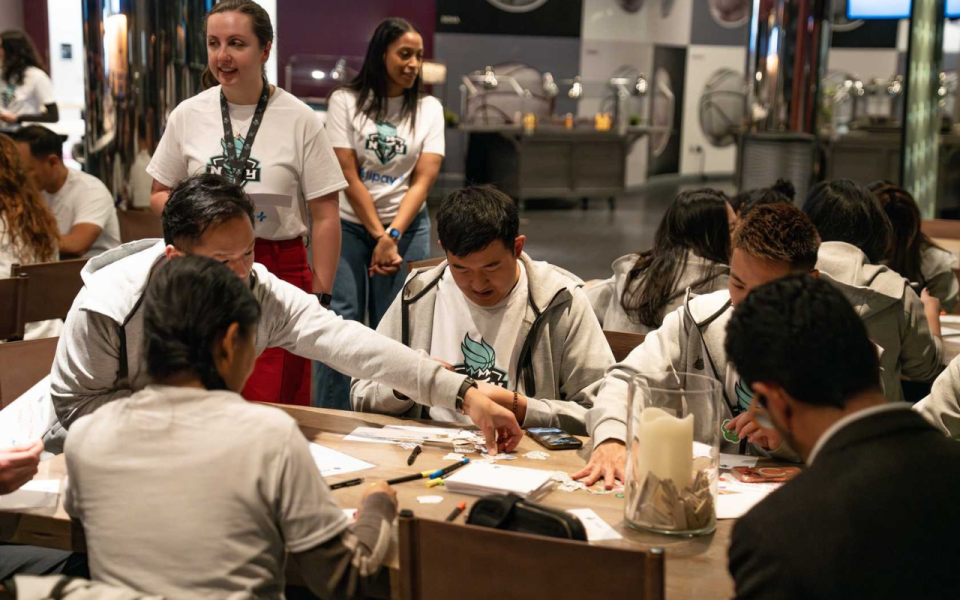
At our recent US merchant forum, this came to life in a discussion that brought together technology platform leader Ant International, global brand leader Nike and the New York Liberty to show exactly why sustainability best practice requires collaboration, not competition.
For Nike's Li Fan, the starting point is somewhat of a philosophical one.
"Protecting the planet is protecting the future of sports” she remarked. “If there's no clean air, no clean water, no clean space to play, then there's no future for Nike — and no future for business."
Nike's response has been to make sustainability tangible for consumers. In our previous article, we discussed its Recycle Shoe Programme — developed in partnership with Ant Group's Ant Forest platform, where worn shoes are collected directly from consumers via Alipay's super-app mini-programme, then converted into new sports playgrounds in urban and rural communities alike. It’s a genuinely circular outcome that leverages the combined powers of both parties.
And Li Fan also shared a second collaboration — a 'green after-sale' programme developed in partnership with Ant Forest — designed to reduce unnecessary returns in China's booming e-commerce market. When a consumer completes a purchase without generating a return within ten days, they earn Ant Forest green energy points. A small nudge, but one that reframes everyday consumer decisions as environmentally meaningful acts.
Shana Stevenson put forward equally compelling perspective. For the New York Liberty, sustainability is not a dedicated function – it is embedded in the brand's DNA. It’s expressed in New York Liberty’s community engagement, creative repurposing, and the power of sport to convene people around shared values.
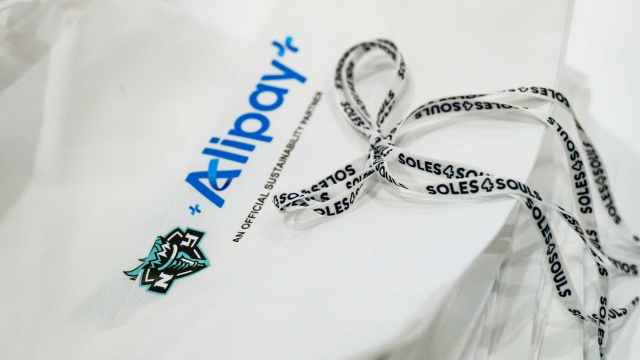
In our last article, we spoke about the Liberty's Sneaker Drive — in partnership with Soles4Souls and now expanding through the team's new partnership with Ant International — collected over 500 pairs of sneakers in its last season, and as a reminder diverted more than 700 pounds of waste from local landfills and generating $5,000 in economic value for communities. This season, the goal is to double that figure. The team's 'Threes for Trees' programme plants a tree for every three-point basket scored, linking the team’s performance directly to environmental impact happening on fans’ doorsteps.
Stevenson also highlighted the repurposing of 12 eight-foot art installations originally commissioned to honour the Liberty's 2024 championship team. Rather than discarding the displays after their exterior run, the team relocated them inside the Barclays Centre arena — creating an ongoing community art experience and extending the life of assets that might otherwise have become waste.
Leiming Chen positioned Ant International's sustainability work as inseparable from its commercial purpose. With over 1.6 billion accounts, more than 1.2 billion consumers reached directly or indirectly, and over 150 million merchant relationships globally, Ant's scale creates both an obligation and an opportunity.
"The bigger the scale you have, the bigger your responsibilities,” said Leiming. “Business success is not just measured commercially — it's measured by what you bring to the markets and communities you serve."
Ant has been active in enabling sustainable practices for global small and medium-sized enterprises. By leveraging alternative transaction data from merchant payments, Ant International helps SMEs access growing finance, turning data into capital for businesses that traditional lenders might have historically underserved.
The acknowledgment from all three speakers was that no single organisation, however large, can lead on sustainability alone.
"Sustainability is one of the few areas where brands don't need to compete,” said Li Fan. “Progress requires collaboration, and more brands standing together."
In this regard, Nike brings the consumer reach and product expertise, Ant brings the digital infrastructure, payment touchpoints, and behavioural incentive mechanics, and the New York Liberty brings community trust, fan engagement, and the amplifying power of sport. Each has a niche, a skillset, and creates a bond that is greater than the sum of its parts.
The consensus was simple: sustainability for its own sake is not sustainable. Nor is commercial growth without community impact. The organisations best placed to thrive in the decade ahead will be those that find the natural connection between the two — and build their partnerships accordingly and in collaboration with others that impact those communities in different ways.